



Trust, alignment, and agility, without them, even the most talented teams fail. Is your team built for success?
Organizations achieve excellence not through individual brilliance alone but through the strength of their teams. Functional teams, in particular, are the backbone of any company, responsible for delivering expertise in their specialized areas while working in alignment with broader business objectives. However, simply gathering skilled individuals is not enough to ensure success. Without trust, accountability, and a shared sense of purpose, even the most talented teams can struggle with misalignment, inefficiency, and disengagement.
At ABAMI, we have developed a structured approach to building Agile High-Performing Teams, a methodology that enables organizations to cultivate teams that are aligned, engaged, and capable of delivering exceptional results. Our methodology is built on a foundation of trust, collaboration, and strategic alignment, ensuring that teams operate with clarity and purpose. By diagnosing team dynamics, fostering psychological safety, and equipping leaders with the right tools, we transform functional teams into agile, results-driven units.
Understanding the Foundations of an Agile High-Performing Team
A high-performing team is defined by its ability to deliver specialized expertise while seamlessly integrating with the larger organizational ecosystem. Our approach is rooted in three essential pillars that shape the effectiveness of any team:
- The Self – Individual self-awareness is the cornerstone of team success. We help team members understand their strengths, working styles, and blind spots, enabling them to collaborate more effectively.
- The Team – Understanding team dynamics is critical to fostering collaboration and synergy. We assess how team members interact, how decisions are made, and where potential dysfunctions exist.
- The Organization – A functional team does not operate in isolation. We ensure that every team aligns its objectives, behaviors, and strategies with the larger organizational vision.
When these three elements are nurtured, functional teams become more agile, adaptable, and capable of delivering sustained excellence.
Diagnosing the Team’s Current State
Before transformation begins, we assess the current state of the team using a combination of diagnostic tools and structured assessments. This step ensures that interventions are tailored to address specific challenges and opportunities.
Our diagnostic approach includes:
- Psychometric Assessments (MBTI, StrengthsFinder, Conflict Profiles) – Helping team members understand their personalities, decision-making styles, and how they interact with others.
- Team Engagement Surveys – Evaluating levels of trust, accountability, and alignment within the team.
- Functional Team Diagnostics – Identifying pain points such as communication breakdowns, unclear roles, or inefficiencies in processes.
We often find that teams struggle with key dysfunctions that hinder their ability to perform effectively. Inspired by Patrick Lencioni’s model, we help teams overcome:
- Absence of Trust – Encouraging transparency and psychological safety.
- Fear of Conflict – Developing constructive conflict resolution strategies.
- Lack of Commitment – Creating clarity in decision-making and team alignment.
- Avoidance of Accountability – Instilling a culture of shared responsibility.
- Inattention to Results – Keeping the team focused on collective success.
By identifying and addressing these dysfunctions, we lay the groundwork for true team cohesion and alignment.
Our Approach to Building an Agile High-Performing Team
1. Establishing Trust and Psychological Safety
Trust is the foundation of every high-performing team. Without it, collaboration suffers, engagement declines, and progress stalls. We foster trust by:
- Encouraging open and transparent communication that allows team members to share ideas and concerns freely.
- Creating safe spaces for vulnerability, where team members can admit mistakes without fear of blame.
- Facilitating structured team-building activities that strengthen interpersonal relationships.
- Providing leadership coaching to model trust-building behaviors at all levels.
A team that trusts each other is more willing to take risks, collaborate effectively, and commit to shared goals.
2. Leveraging Conflict as a Catalyst for Growth
Many teams view conflict as a negative force, but when managed correctly, it becomes a powerful tool for innovation and better decision-making. We help teams embrace healthy conflict by:
- Teaching conflict resolution techniques to ensure disagreements lead to productive outcomes.
- Developing a culture of constructive debate where team members feel comfortable challenging ideas.
- Defining guidelines for professional discussions to prevent conflicts from becoming personal.
Through guided exercises, we transform conflict from a roadblock into a stepping stone for team success.
3. Aligning the Team with Organizational Goals
Alignment is what differentiates a functional team from a truly high-performing one. A team that lacks clarity on its purpose and priorities will struggle with misalignment and inefficiency. Our methodology ensures that teams gain:
- A clear understanding of their role within the organization, ensuring their efforts contribute to broader business objectives.
- A shared vision and mission that keeps the team focused on long-term success.
- Defined team values and behavioral standards that guide interactions and decision-making.
We work with teams to address six critical clarity questions:
- What is our purpose as a functional team?
- How does our work align with the company’s overall strategy?
- What behaviors define our team culture?
- How do we measure success?
- What are our priorities for the next quarter/year?
- Who is responsible for what?
With these questions answered, teams gain a structured playbook that guides their actions and decisions.
Leadership’s Role in Team Performance
No team can reach its full potential without strong leadership. Our methodology places a heavy emphasis on leadership coaching to ensure that team leaders:
- Set clear expectations and provide direction.
- Encourage collaboration and engagement.
- Model accountability and trust-building behaviors.
- Continuously develop their own leadership capabilities.
Leadership coaching is tailored to the unique needs of each organization, equipping leaders with the tools to motivate, align, and develop their teams effectively.
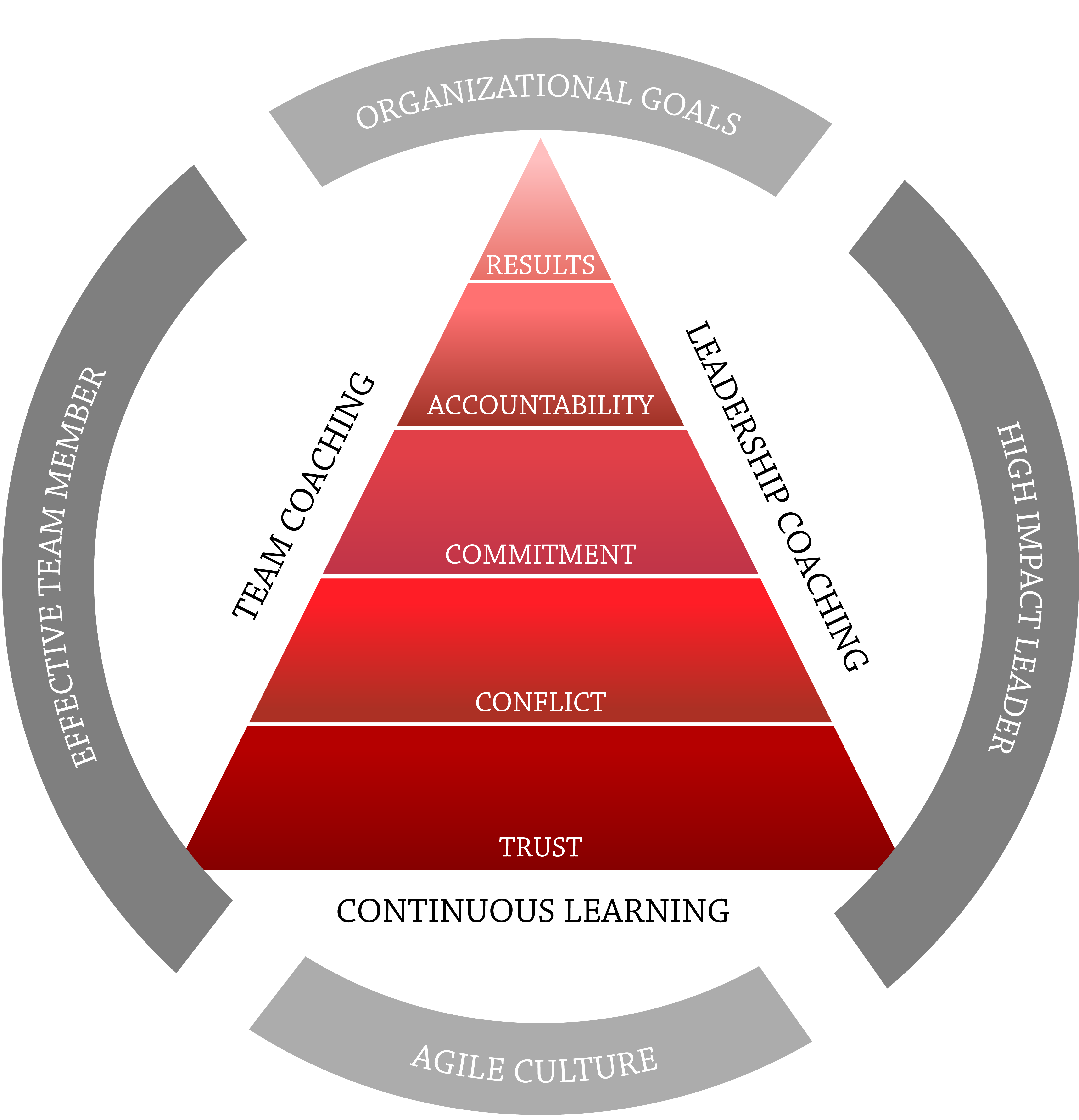
At ABAMI, we believe that building an Agile High-Performing Team is a journey, not a one-time initiative. Teams evolve over time, and sustained performance requires continuous alignment, trust-building, and leadership support.
By implementing our methodology, organizations can develop teams that are resilient, collaborative, and strategically aligned with business goals. The result? A workplace where functional teams operate with clarity, accountability, and a shared commitment to excellence.
The journey toward high performance and agility starts now, and we are here to guide the way.