



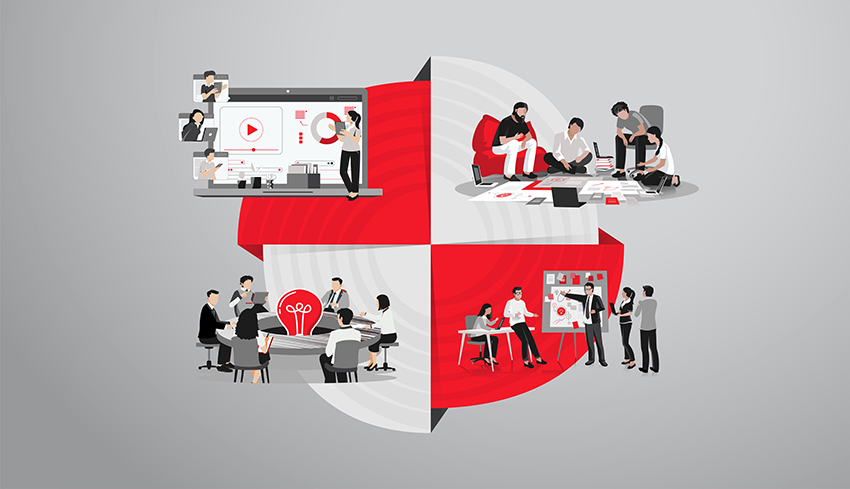
By fostering an agile learning culture, organizations future-proof their workforce and gain a key edge: the ability to learn, unlearn, and relearn.
Organizations everywhere are asking the same question: how can we stay ahead in a world that keeps changing? The answer often lies in how we grow our people, not just with skills, but with a mindset ready to learn, adapt, and lead. Building an agile learning culture is no longer a competitive advantage; it’s a necessity. This shift in approach requires a rethinking of how learning is designed, delivered, and experienced. By integrating blended learning strategies, organizations can empower their people to adapt, grow, and lead with resilience.
At the heart of our philosophy is a simple yet powerful idea: learning must be agile, engaging, and aligned with the realities of the modern workforce. What follows is our practical approach to nurturing agile learning cultures within organizations.
Why Agile Learning Matters
An agile learning culture encourages curiosity, adaptability, and accountability. It aligns personal growth with organizational goals, creating a work environment where learning is embedded in the day-to-day. For leaders and HR professionals, the objective is clear: equip teams to navigate complexity with confidence. The agile approach makes learning iterative and user-centric, enhancing retention, relevance, and results.
From Traditional to Transformational Learning
The expectations of today’s learners have evolved. They value learning experiences that are customized, flexible, and meaningful to their specific roles and development goals. To meet these expectations, organizations need to move beyond standardized training and adopt approaches that center on the learner’s needs and preferences.
This transformation includes:
- On-demand digital content tailored to individual pace and learning style
- Social and collaborative learning that encourages peer-to-peer exchange
- Instructor-led workshops that emphasize real-time engagement
- Gamified simulations that mirror real-world scenarios for deeper understanding
- AI-enabled personalization that adapts content based on learner behavior
- Coaching and mentoring to reinforce and contextualize learning
Designing for Impact: A Multi-Layered Approach
Successful skill development starts with understanding the learner. Through a consultative process rooted in Bloom’s Taxonomy, organizations can create modular learning journeys aligned with various leadership levels and organizational goals. These journeys may include:
- Pre-assessments to identify gaps
- SPIKE modules: short, practical, and experiential learning engagements
- Interactive digital tools like drag-and-drop challenges and micro-videos
- Learning circles: small group coaching sessions that reinforce application
- Simulations to replicate high-stakes scenarios
This is the foundation of our work: designing and delivering learner-centric journeys that are adaptable, impactful, and scalable.
Creating a Culture of Engagement
Transforming learning requires more than delivering content; it requires cultivating the right environment. Organizations must foster safe, inclusive, and encouraging spaces where employees feel empowered to ask questions and explore growth opportunities. Promoting a mindset focused on growth ensures that learning becomes a positive and shared experience.
This cultural shift includes:
- Microlearning for time-strapped professionals
- Peer coaching ecosystems to foster collaboration and shared knowledge
- Values-driven design ensuring alignment with the organization’s broader mission
Our learning programs are designed to spark this cultural evolution, from passive training to proactive learning ecosystems.
Ecosystem Thinking: Learning Everywhere
A modern learning strategy requires a holistic ecosystem where every interaction is a chance to learn. From onboarding to leadership development, the learning journey must be accessible, relevant, and evolving.
Key applications of this approach include:
- Behavioral change initiatives
- Productivity and collaboration enhancements
- Innovation and ideation sessions
- Wellness and engagement programs
- Customer service and onboarding improvements
The Role of Facilitation in Learning Transformation
Facilitation plays a pivotal role in creating meaningful learning experiences. Rather than directing learning, facilitators guide participants through exploration, dialogue, and practical application. This enables individuals to take ownership of their development, making learning both engaging and sustainable.
Our facilitation model is designed to empower, not prescribe, ensuring that participants remain at the center of every learning experience.
Embracing the Future of Learning Today
As the pace of change accelerates, the need for agile, blended, and human-centered learning grows stronger. Organizational leaders, L&D professionals, and HR decision-makers must lead this charge by embracing innovative learning frameworks that are dynamic, scalable, and deeply engaging.
This is our approach to building an agile learning culture, an approach grounded in experience, driven by strategy, and designed for impact.
By cultivating an agile learning culture through blended strategies, organizations not only future-proof their workforce but also unlock their greatest competitive advantage: the ability to learn, unlearn, and relearn with agility.