Most leadership teams can point to their strategy. Few can name the handful of actions that actually make it move.
Jim Collins popularized the Flywheel as a way to explain how great organizations build unstoppable momentum. This is the thinking behind it, and how ABAMI applies it in practice.
Sustained momentum is one of the hardest things for an organization to build, and an even harder thing to keep. Leadership teams launch new initiatives, campaigns, and programs with real energy, only to watch that energy scatter into a series of disconnected efforts that never quite compound into anything larger than themselves.
This is one of the most common patterns we see across transformation work in the region: the intent is genuine, the effort is real, and the energy still leaks out somewhere between the boardroom and the daily work of the organization.
Where Momentum Breaks Down
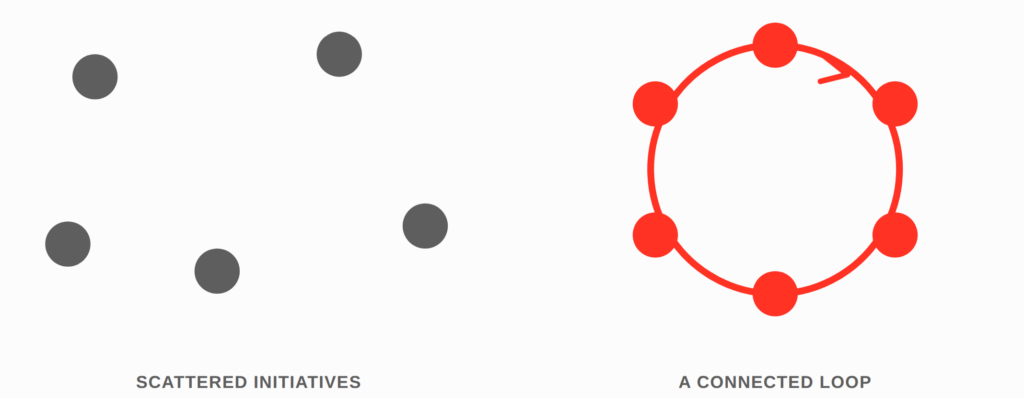
Ambition and effort are rarely the missing ingredients. What is missing is a repeatable rhythm: knowing what to do every single day, in what order, and why one action should reliably lead to the next. Without that connective structure, organizations default to initiative-driven change: a new campaign here, a restructuring there, a leadership offsite that produces energy for a quarter and then fades. Each initiative may be well designed. None of them reinforce each other.
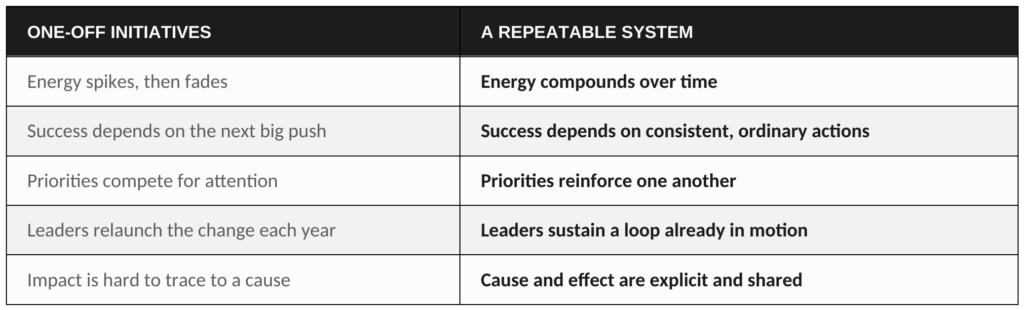
That difference usually traces back to one simple test: has the organization ever built, named, and agreed on the handful of activities that actually drive its momentum?
The Flywheel: A Concept From Jim Collins
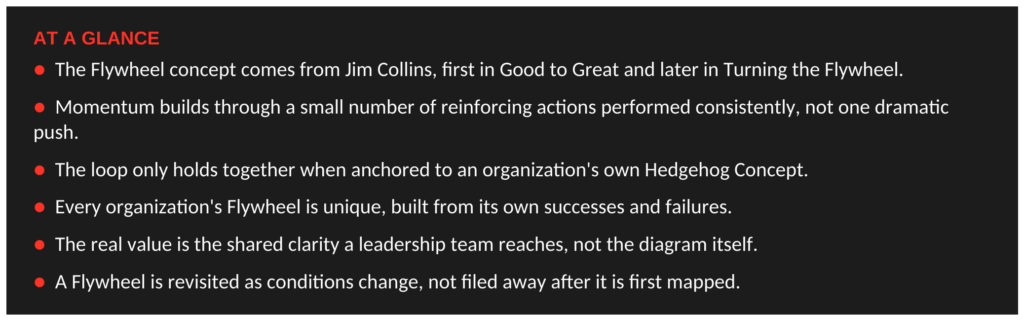
The Flywheel is a concept associated with Jim Collins, introduced in his book Good to Great and developed further in his later work, Turning the Flywheel. Collins set out to understand why some companies made a lasting leap from good performance to great results while comparable organizations, facing similar conditions, did not. His research pointed away from any single defining decision, breakthrough product, or stroke of luck, and toward something less dramatic: sustained effort applied in one coherent direction, repeated long enough for its effects to build on each other.
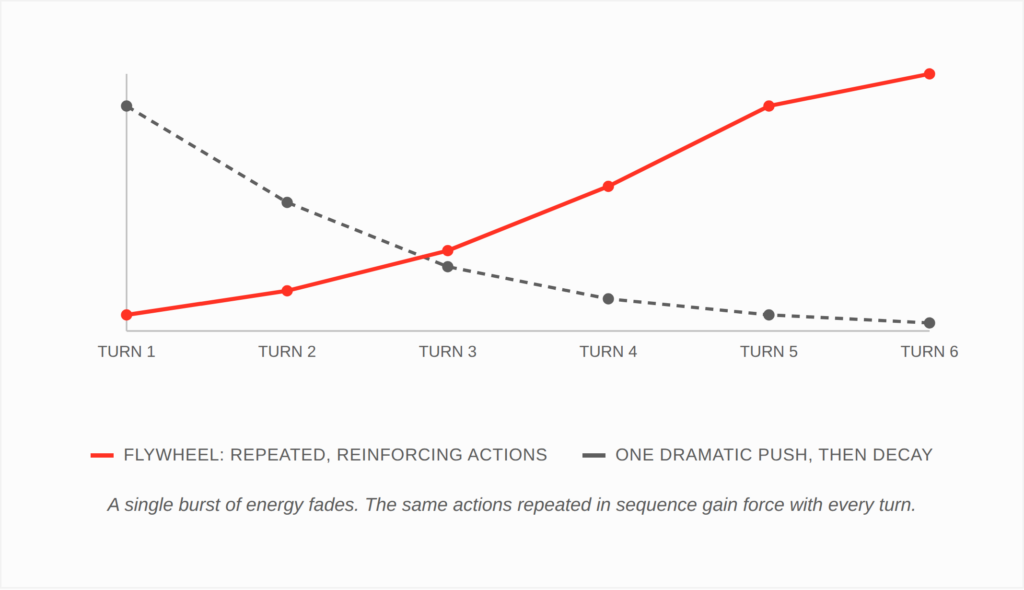
Collins illustrated the idea using a large, physical flywheel that takes real effort to get moving. Applied to organizations, the point is straightforward: results rarely come from one bold initiative. They come from a small number of ordinary actions, done consistently and in the right sequence, until their combined effect becomes far larger than any single action on its own.
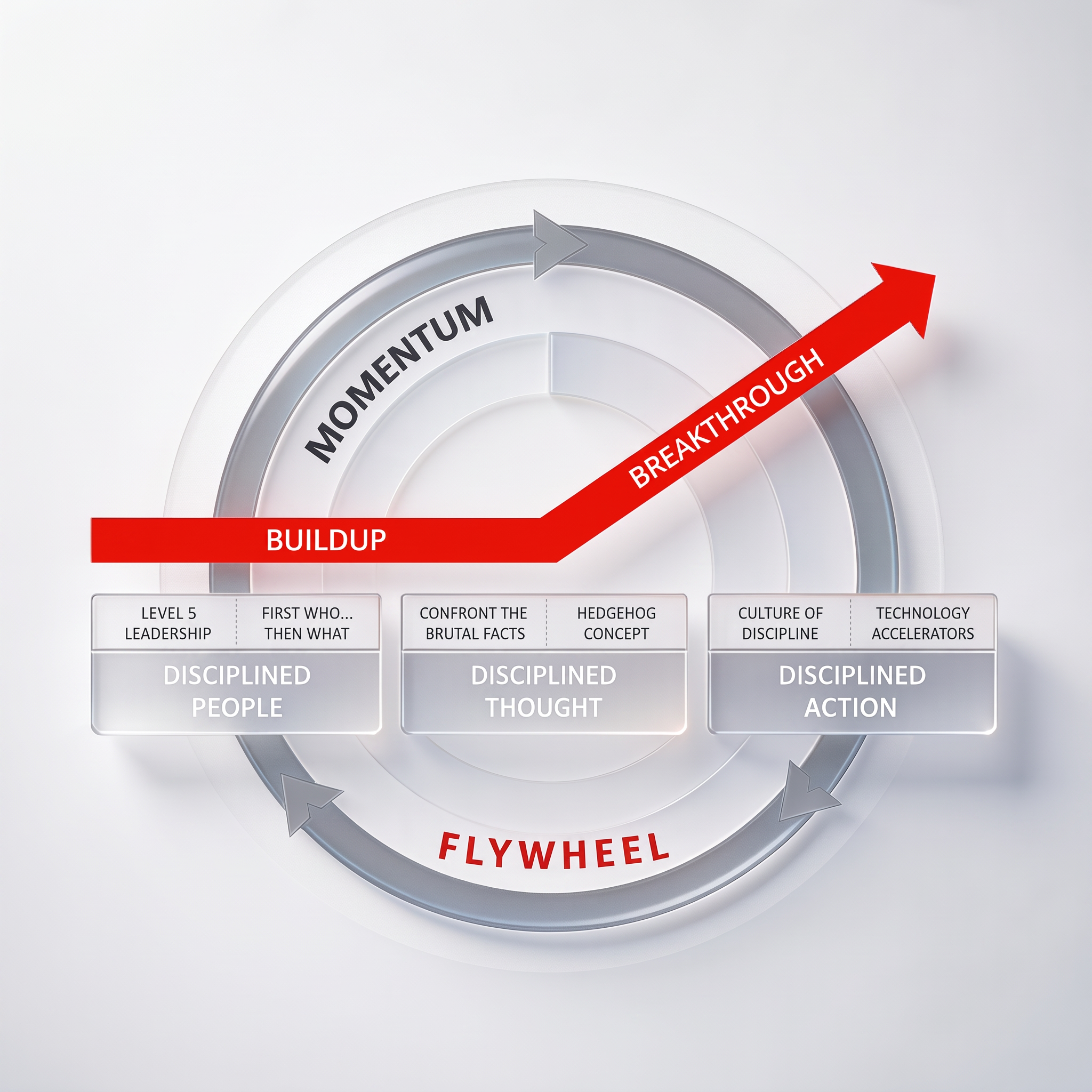
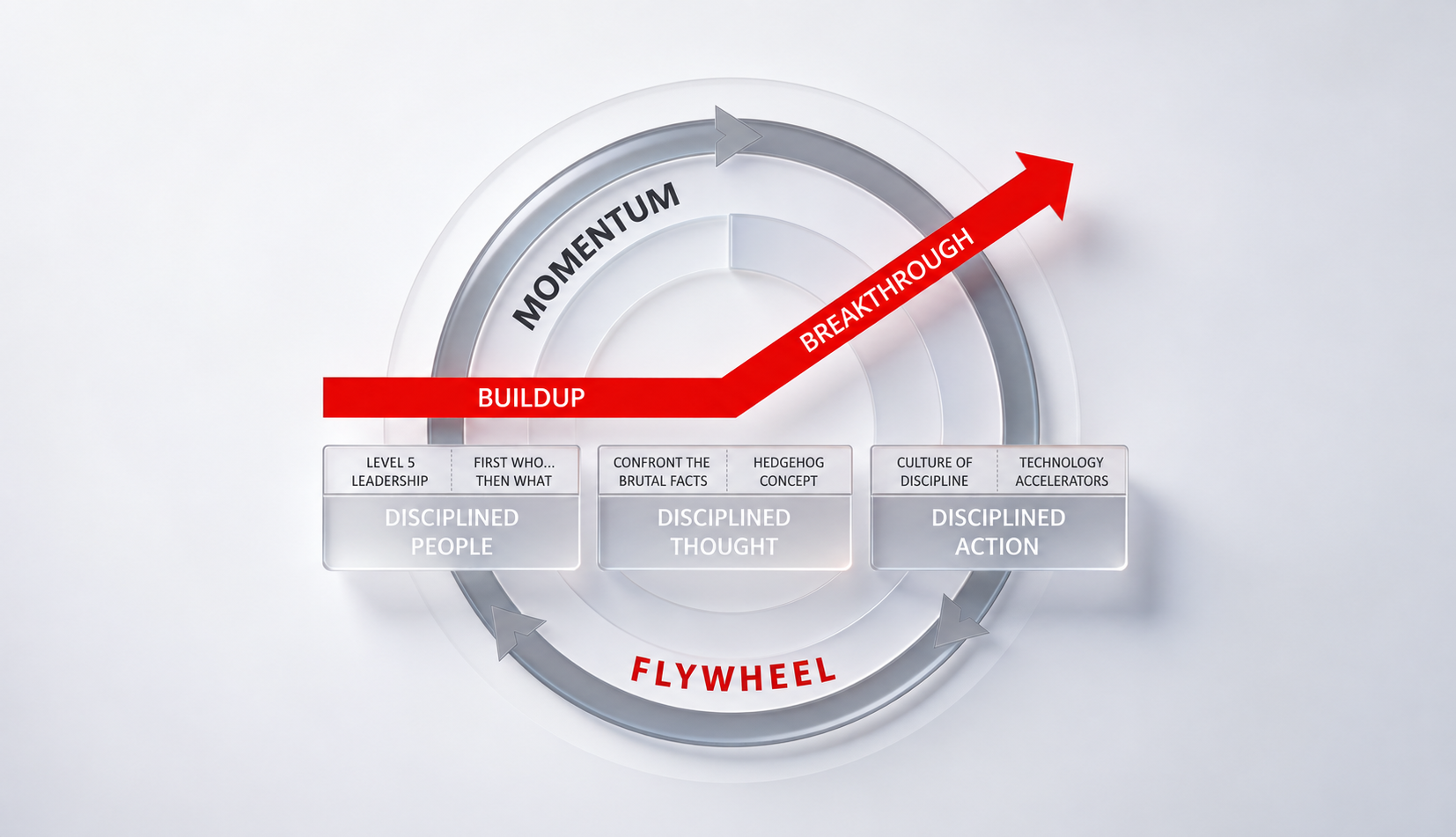
Jim Collins’ original Flywheel model, from Good to Great, shown here for reference.
Why the Flywheel Works
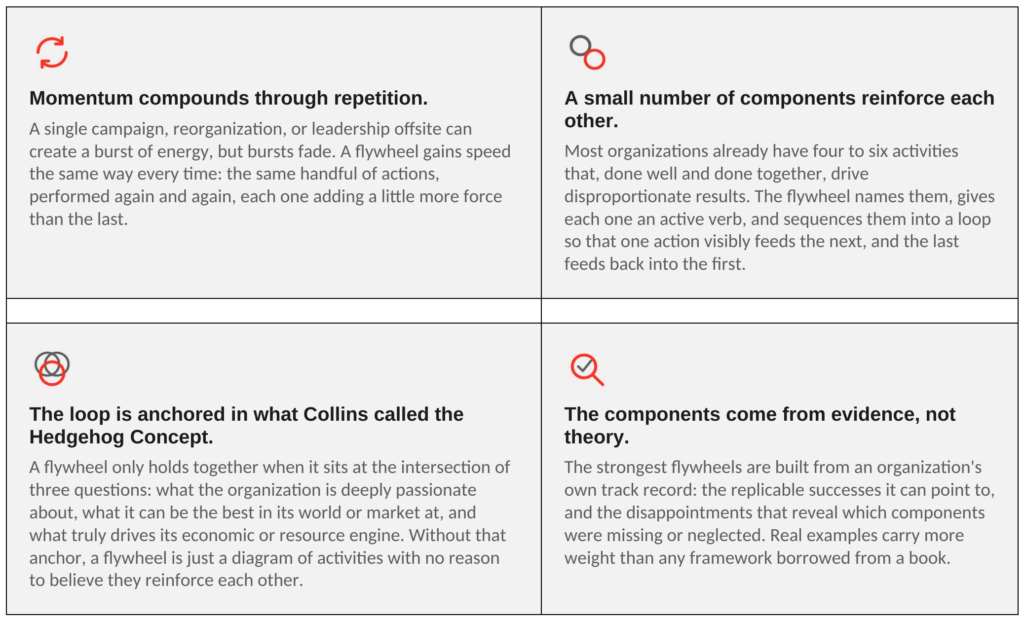
A few principles explain why this idea holds up across very different organizations.

Every Organization’s Flywheel Looks Different
Because a flywheel is built from an organization’s own strengths, customers, and economic engine, no two look alike. Collins pointed to very different organizations to make this point: a well-known retailer whose lower prices draw more customer traffic, which in turn attracts more sellers and a wider selection that reinforces the low prices further, or a leading hospital system whose investment in top medical talent builds a patient centered culture that draws more patients and, in turn, funds further investment in talent and facilities. Each loop reflects a different purpose and a different set of strengths. A flywheel built from an organization’s own successes and failures functions as a genuine management tool, something a copied version of someone else’s diagram can never quite replicate.

What Flywheel Thinking Delivers
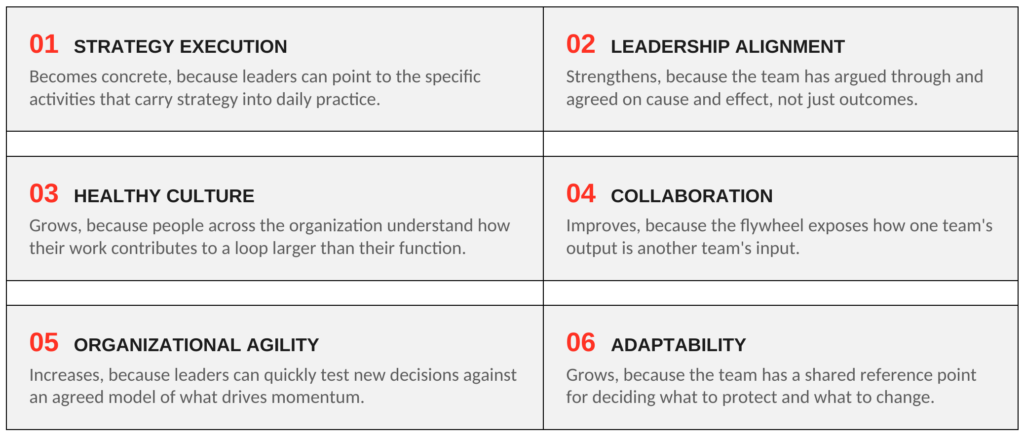
Organizations that build genuine clarity around their own flywheel consistently see movement across six connected areas.
The Real Value Is Shared Clarity
The value of mapping a flywheel sits mostly in the clarity a leadership team reaches, not the diagram itself: agreement on where momentum starts, who owns which part of the loop, and what does not belong in it because it does not feed the cycle. That clarity, once reached, becomes a decision filter leaders return to again and again.

Questions That Anchor a Flywheel
There is no fill-in-the-blank template for building a flywheel, because the answers have to reflect the organization’s own reality. The questions that matter tend to be the same, regardless of who is asking them:
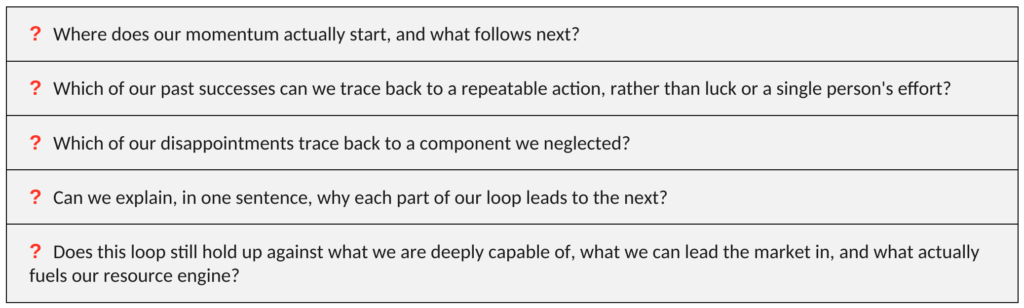
A flywheel earns its value only when it is built from honest answers to questions like these, not adapted from someone else’s diagram.
The Flywheel as a Living Tool
A flywheel needs maintenance well after the initial mapping is done. Because it is anchored in what actually drives results, it needs to be revisited as conditions change: when a component stops producing results, when a shift in the market changes what drives the economic engine, or when a new leadership team takes over. This idea of continual renewal is part of what makes the concept endure: a flywheel is not a plan retired after a single planning cycle, but a pattern organizations keep applying, turn after turn, long after any single initiative has run its course.
Strategy sets the direction. The Flywheel, a concept we credit to Jim Collins and have built into how ABAMI helps leadership teams think about execution, is what keeps the organization moving toward that direction, one deliberate turn at a time.