



By recognizing and addressing both visible and hidden aspects, organizations can create a more cohesive and engaged workforce
Organizational culture plays a pivotal role in shaping workplace dynamics, influencing employee engagement, and driving overall success. It defines the environment in which people work, how they interact, and the values they uphold. Culture is often seen as the “glue” that binds an organization together, fostering a sense of belonging and purpose. However, understanding and managing culture can be challenging because much of it operates beneath the surface, out of immediate sight. One insightful model for understanding this complexity is the Culture Iceberg. This model illustrates the visible and hidden elements of culture, similar to an iceberg where only a small portion is above the surface. Grasping this concept is essential for leaders and teams who seek to cultivate a thriving, aligned, and effective workplace environment.
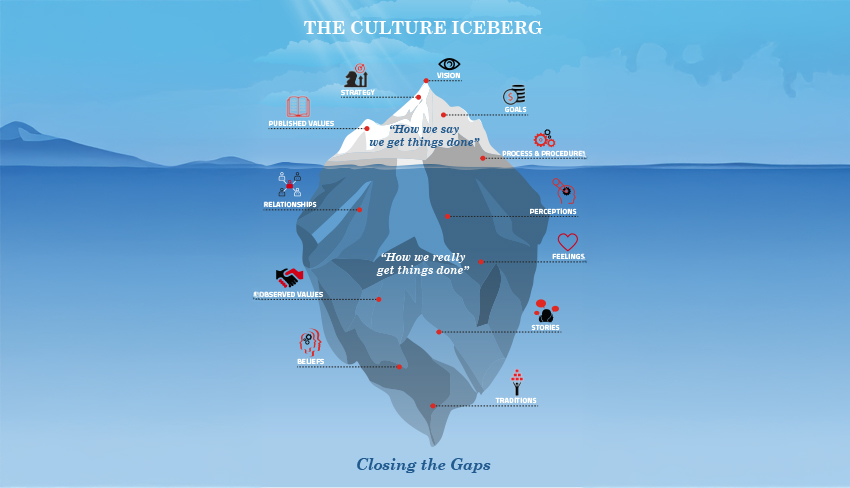
The Culture Iceberg metaphor presents culture as an iceberg, where the visible part represents easily observable aspects, while the larger, submerged portion signifies deeper, often unspoken elements. This framework comprises two primary sections: the visible culture above water and the hidden culture below.
Above the Waterline: The Visible Components – How we say we get things done
The visible aspects of culture are those that can be readily seen and discussed. These include:
1. Vision: The overarching aspirations of an organization. A well-defined vision acts as a guiding principle, helping align team efforts toward shared objectives and inspiring employees to work collectively.
2. Strategy: This encompasses the plans and actions that outline how the organization intends to achieve its vision. A clear strategy ensures efficient resource allocation and clarifies individual roles within the larger framework.
3. Published Values: These are the principles and values that the organization openly endorses, often articulated in mission statements and codes of conduct. While these values provide a foundation for expected behavior, discrepancies between stated values and actual practices can lead to distrust.
4. Goals: Specific objectives that the organization aims to achieve within a designated timeframe. Well-defined goals help prioritize tasks, facilitate progress tracking, and foster accountability among team members.
5. Processes and Procedures: The formalized methods and guidelines that dictate how tasks are carried out. Effective processes contribute to operational consistency, though it’s important to balance them with flexibility to encourage innovation.
Below the Waterline: The Hidden Components – How we really get things done
The hidden aspects of culture, while less visible, are often more influential in shaping the overall environment. These include:
1. Perceptions: These are the mental frameworks or interpretations that people develop based on their experiences within the organization. Their perceptions of leadership, organizational values, and work culture influence their behavior and engagement. When perceptions don’t match the reality of the organization, it can lead to confusion, disengagement, or frustration.
2. Feelings: The emotional responses people have regarding their work environment, including job satisfaction, stress, loyalty, or frustration. Prioritizing emotional health contributes to overall engagement and productivity.
3. Observed Values: The actual behaviors and practices evident in the organization that may not align with the stated values. Observed values often reveal the true culture and can lead to skepticism if misaligned.
4. Beliefs: Deeply ingrained convictions that shape how people perceive their work and the organization’s mission. These beliefs influence behaviors and decision-making processes at all levels.
5. Stories: Narratives shared within the organization that reflect its history, values, and experiences. Stories can reinforce cultural norms, highlight exemplary behavior, and foster a sense of identity among everyone.
6. Traditions: Established practices and rituals that have developed over time, contributing to a sense of continuity and community. While traditions can strengthen bonds among team members, they may need to be reassessed to remain relevant.
7. Relationships: The interpersonal dynamics within the organization, including trust, communication patterns, and social networks. While relationships may seem like a visible component, they are often shaped by unspoken norms, feelings, and beliefs. Strong relationships contribute to a cohesive, collaborative work environment, while weak or toxic relationships can hinder performance and morale.
Closing the Gap
The central theme of the Culture Iceberg emphasizes the contrast between “How we say we get things done” (visible) and “How we really get things done” (hidden). Addressing this gap is vital for the health of the organization:
• Building Trust and Engagement: A significant disconnect between what is stated and what is practiced can undermine trust. Bridging this gap is essential for nurturing a positive workplace environment.
• Cultural Alignment: Ensuring that published values align with observed behaviors requires intentional efforts, including revisiting core values and enhancing communication.
• Fostering Continuous Improvement: Organizations must remain agile and adaptable in their cultures. Regular feedback, open dialogues, and responsiveness to people’s concerns are key to effective cultural management.
• Leadership’s Role: Leaders have a critical influence on organizational culture. By exemplifying desired behaviors and fostering inclusivity, they can help bridge the gap between stated and lived culture, promoting trust and engagement.
The Culture Iceberg serves as a valuable framework for understanding the intricacies of organizational culture. By recognizing and addressing both visible and hidden aspects, organizations can create a more cohesive and engaged workforce. This comprehensive approach fosters alignment, trust, and a sense of belonging, empowering everyone to thrive and contribute meaningfully.
As organizations face the challenges of a rapidly evolving business landscape, the Culture Iceberg reminds us of the importance of deep cultural understanding. By exploring both surface and underlying aspects of culture, organizations can cultivate environments that not only achieve business objectives but also enhance the people’s satisfaction and overall well-being.